Venus-Saturn Quincunx Aspect
Updated: January 2, 2026 15:34 Scorpion
Subject Content
Venus-Saturn Quincunx Aspect
What is the Venus-Saturn quincunx aspect, what does it mean, and how does it affect us? This aspect, which requires fine-tuning between emotional needs and a sense of responsibility, indicates the need for small but consistent adjustments in relationships.
Venus-Saturn Quincunx aspect not "incompatibility" in relationships and value perceptions, adjustment required This aspect highlights the theme of "love, intimacy, aesthetics, and sharing." In this respect, Venus's desire for love, closeness, aesthetics, and sharing doesn't speak the same language as Saturn's need for boundaries, responsibility, and structure. There isn't a direct conflict; rather, it's a search for balance between two different frequencies in the same environment. Therefore, the Venus-Saturn Quincunx often prompts the individual to ask, "Is something missing, or is there too much?"
Relationships are generally better for people with this aspect. It walks with effort Love doesn't flow spontaneously; it matures over time. A person may want to connect on one hand, while feeling the need to maintain distance on the other. This can appear as coldness to the other person, but underlying it stems from a need for security and a search for control. Venus represents "closeness" here, while Saturn emphasizes "stability first."
Due to the nature of the Quincunx aspect, this effect becomes more apparent during certain periods of life. This need for internal adjustment becomes particularly pronounced when relationships become serious, such as marriage or long-term commitments. The individual either makes excessive sacrifices or creates unnecessary distance. Balance can only be achieved through awareness.
This perspective does not completely reject the concept of love; on the contrary, a more conscious model of love It paves the way for improvement. Love, when combined with responsibility, becomes lasting; however, this requires a restructuring of one's own sense of value.
The Energy Dynamics Between Venus and Saturn
One represents closeness, the other boundaries; in this dynamic, balance is established consciously, not automatically.
The relationship between Venus and Saturn clearly illustrates the difference between "pleasure and responsibility" in astrology. Venus values pleasure, harmony, and mutual sharing in relationships, while Saturn demands long-term security, structure, and resilience. In a quincunx aspect, these two energies neither support nor explicitly challenge each other; rather, they... It forces adaptation .
In this dynamic, a person often feels the following:
Love is present, but it's not comfortable; attachment exists, but warmth is sometimes lacking. This is because Saturn constantly tells Venus, "Be more stable, be more realistic." Venus, in turn, sometimes perceives this pressure as a feeling of inadequacy. Internal questioning may arise, particularly regarding whether one is worthy of being loved.
This energy manifests itself frequently in the following areas:
- Switching between distance and closeness in relationships.
- Shyness when expressing love.
- The need for financial security outweighing emotional connections.
- The need for validation is confused with the need for appreciation.
However, this dynamic also has a powerful side. The individual is not content with superficial relationships. The harmony that Venus seeks is facilitated by Saturn. seriousness and continuity They win. Over time, a person realizes that love is not just a feeling, but also a responsibility. This realization lays the foundation for relationships that come late but are solid.
Effects on Relationship and Marriage Life
This approach emphasizes a "less is more" philosophy in relationships; emotions progress in a controlled manner, not quickly.
The Venus-Saturn Quincunx aspect suggests that in relationships and marriage, there should be more emphasis on sudden beginnings than impulsive ones. cautious steps He explains. The person doesn't easily form attachments; but when he does, he takes the relationship seriously. However, this seriousness can sometimes strain the emotional flow. When expressing love, one can lose control: either too much is held back or too much responsibility is taken on.
People with this aspect often experience the following in relationships:
- The need to be assured of being loved.
- The perception of duty and burden outweighs other considerations in the relationship.
- Expectation of maturity and stability from a partner.
- As emotional intimacy increases, inner withdrawal occurs.
When it comes to marriage, this perspective emphasizes the theme of "readiness." People don't want to enter marriage without feeling secure enough. This can delay marriage; however, the bonds formed are generally long-lasting. The important thing here is not to let love become a testing ground.
When balance is achieved, Venus-Saturn Quincunx contributes the following to relationships:
Respect for love, loyalty to commitment, and a shared sense of responsibility. When a person learns to express their emotions without suppressing them, but by controlling them, a more secure foundation for the relationship is created for both themselves and their partner.
What is the Quincunx Angle in Astrology and How Does It Affect?
The Quincunx angle describes not direct harmony or conflict, but a constantly perceived yet difficult-to-define need for adjustment.
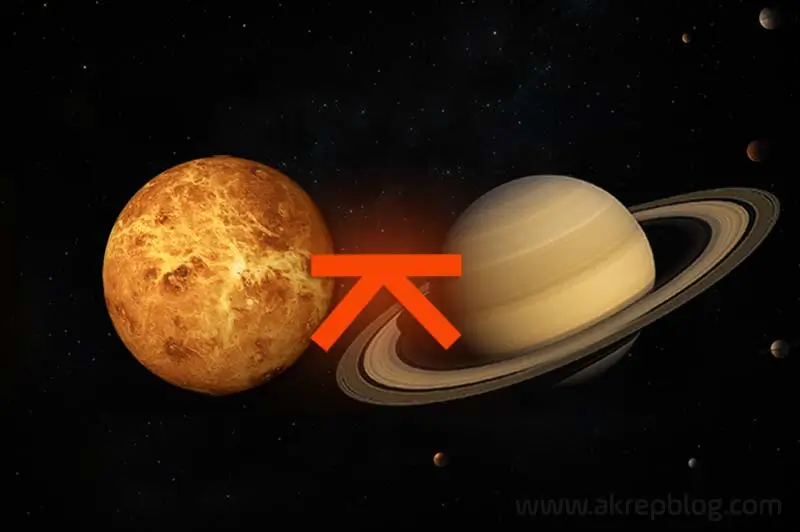
in astrology Quincunx angle It represents a distance of 150 degrees and, although often referred to with the word "divergence," its fundamental theme is actually... obligation to conform Stop. Planets in this aspect neither comfort nor overtly challenge each other. There is a constant need for fine-tuning between them. While experiencing this aspect, one struggles to define a clear problem; however, deep down, one feels that something is not quite right.
Quincunx is the symbol for the angle "⚻ This aspect is shown as "..." and needs to be carefully considered in astrological charts. Because if this aspect goes unnoticed, it can cause inner restlessness; but when it is noticed, it provides an important area for growth. Its effects are particularly felt in relationships, health, daily habits, and psychological balance.
The main effects of this aspect can be summarized under the following headings:
- The need for constant adjustment and adaptation.
- The feeling of "correct but incomplete"
- Recurring situations until conscious awareness develops.
- It lays the groundwork for small but lasting changes.
Venus Saturn Quincunx angle Specifically, this effect necessitates striking a delicate balance between the understanding of love and a sense of responsibility. One can neither completely surrender to emotions nor proceed solely with logic. Therefore, this perspective describes a process of awareness that matures over time. Balance can only be achieved by clearly recognizing one's own inner needs.
Venus-Saturn Quincunx Aspect: Positive and Negative Effects
This aspect, when managed correctly, can lead to strong bonds; if left unnoticed, it can cause a silent inner tension.
The Venus-Saturn Quincunx aspect exerts its effects not through sudden events, with feelings accumulated over time This shows that the positive and negative aspects are often intertwined. A person may have the potential to form strong relationships on one hand, while on the other hand, they may feel unable to express themselves comfortably enough. Under this heading, examining the two aspects of this angle separately allows for a clearer understanding of the balance.
Positive Effects
- Seriousness and a sense of responsibility in relationships.
- The tendency to approach love superficially.
- The potential to build long-term relationships.
- Maturation in the perception of values.
These positive effects usually emerge over time. A person may struggle in relationships at a young age; however, with increasing experience, they learn to better balance Venus's emotional needs with Saturn's desire to build. At this point, love becomes not an escape route, but a source of security and stability.
Individuals with this aspect are not afraid to invest effort in relationships. They don't give up easily and are quite loyal when mutual responsibility is taken. Material and spiritual values become more firmly established over time. Especially in long-term relationships, this aspect plays a role in providing stability.
Adverse Effects
- Shyness when expressing love.
- Feelings of inadequacy or worthlessness
- The tendency to create distance in relationships
- Emotions being overwhelmed by the pressure of responsibility
On the negative side, a person may feel they need to put in extra effort to deserve being loved. This can disrupt the natural flow of relationships. When Saturn's need for control suppresses Venus's desire for intimacy, a sense of coldness can arise.
When these effects go unnoticed, a person can become overly critical of both themselves and their partner. Balance is achieved by accepting that emotions are needs, not burdens. The Venus-Saturn Quincunx aspect significantly softens these negative effects when this awareness develops.
The Spiritual Teachings of the Venus-Saturn Quincunx Aspect
This perspective teaches us that love is not just a feeling; it is a conscious responsibility.
The spiritual teaching of the Venus-Saturn Quincunx aspect is based on transforming the perception of "deserving." People often perceive love as a reward to be earned. However, this aspect suggests that love is not a test, but... a natural need It aims to help one realize this. On a spiritual level, the real lesson is that value is shaped not by external validation, but by internal acceptance.
In this teaching, Saturn teaches patience and setting boundaries, while Venus reminds us of the need for intimacy and sharing. By its very nature, the Quincunx operates with both teachings working simultaneously. The individual either takes on too much responsibility or pushes their emotional needs into the background. Spiritual growth begins when a conscious balance is established between these two extremes.
This perspective supports the following awareness:
- The futility of forcing yourself to attain love.
- The fact that value is not performance-dependent
- Setting boundaries doesn't mean a lack of love.
- Mature love deepens over time.
The Venus-Saturn Quincunx aspect is not meant to harden a person emotionally; emotional resilience It strives to achieve this. The essence of this teaching is realizing that love and responsibility can coexist without suppressing each other. Once this awareness is established, a person develops a more balanced attitude both in their relationships and in their inner world.
How does the Venus-Saturn Quincunx aspect affect things in which house?
This aspect, depending on the home position, shows which areas of life require fine-tuning regarding the themes of love and responsibility.
Venus Saturn Quincunx angle This situation, wherever it occurs in a home, reveals a need for a balance in that living space that is "not quite right, but cannot be ignored." This effect doesn't manifest as sudden crises; rather, it works as gradual unease, internal questioning, and situations requiring adjustment. The person often cannot openly express that there is a problem; however, they constantly feel the need for adjustment in matters related to their home.
When this aspect works in the houses, Venus's search for value, connection, and satisfaction converges with Saturn's need for responsibility, boundaries, and structure. As a result, the individual is neither completely comfortable nor completely detached from the matters represented by that house. The lesson is not to escape or force things; It is about consciously establishing balance. .
Venus-Saturn Quincunx aspect in the 1th house.
An internal adjustment is needed through personal posture, body image, and self-presentation.
Venus-Saturn Quincunx aspect 1th house When in this position, a person may maintain an internal distance from feeling lovable and valued. They may outwardly appear serious, distant, or controlled; yet inwardly, their need for approval and acceptance is strong. This contradiction causes them to constantly weigh their words when expressing themselves.
In this placement, the individual is highly conscious of their appearance, body language, and overall demeanor. They want to avoid making mistakes when presenting themselves, which can sometimes disrupt the natural flow. When a balance is struck between Venus's gentleness and Saturn's seriousness, the person develops a dignified yet confident posture. As their sense of self-worth becomes independent of others' approval, a sense of relief begins.
Venus-Saturn Quincunx aspect in the 2th house.
Material security, self-worth, and a constant search for balance based on possessions come to the forefront.
Venus-Saturn Quincunx aspect 2th house When in this position, a delicate relationship develops between a person's money, possessions, and self-worth. Material matters can become not only a source of security but also an indicator of lovability. If a person doesn't earn or possess enough, they may feel incomplete.
In this placement, Venus's desire for pleasure works in harmony with Saturn's need for frugality and control, without conflict. The individual either restricts themselves excessively or occasionally disrupts the balance with unnecessary spending. The lesson learned over time is this: true value stems not only from material security but also from self-respect. When this awareness develops, both material and spiritual stability strengthens.
Venus-Saturn Quincunx aspect in the 3th house.
Moderation and distance are prominent themes in communication, thought patterns, and close relationships.
Venus-Saturn Quincunx aspect 3th house When in this position, a person tends to be cautious in expressing their feelings and thoughts. They may fear that their words will be misunderstood or not valued enough. Therefore, they may adopt either an overly serious or overly controlled style in their communication.
In close relationships, with siblings, and in daily communication, a sense of responsibility is dominant. The individual may often be the listener, the one who gathers information, or the one who takes on the burden. Venus's desire to share and Saturn's need for distance operate here through words. When balance is achieved, the individual learns to express their thoughts simply but effectively. Communication ceases to be a testing ground and transforms into a tool for establishing secure connections.
Venus-Saturn Quincunx aspect in the 4th house.
The need for emotional security and the sense of responsibility must be balanced through family and internal roots.
Venus-Saturn Quincunx aspect 4th house In this situation, a person's sense of belonging and emotional security is not easily formed. Themes of family, past, and personal space operate on a foundation where love and a sense of duty are intertwined. The person wants to be loved; however, they also hesitate to be an emotional burden. Therefore, they may find it difficult to open up their inner world.
In this placement, family relationships are often defined by a sense of responsibility. Early maturity, taking on a unifying role within the family, or suppressing emotions may be observed. When Venus's need for compassion is balanced by Saturn's influence, the individual gradually learns to build their own inner security without relying on others. This awareness strengthens both family bonds and personal life.
Venus-Saturn Quincunx aspect in the 5th house.
The themes of moderation and control are prominent in the areas of pleasure, romance, and self-expression.
Venus-Saturn Quincunx aspect 5th house When in this position, a person tends to be cautious about love, flirting, and self-expression. They want to have fun, be loved, and be appreciated; however, they fear it might be "too much" or perceived as frivolous. This sometimes limits the spontaneous flow of emotions.
In romantic relationships, a person seeks security rather than frivolity. For them, love is not a game; it is a bond that must carry meaning. This can manifest as romantic shyness or delayed expression in the early stages. Over time, as Venus's expressive power balances with Saturn's maturity, the person expresses both their emotional and artistic sides in a more controlled but lasting way. Pleasure becomes possible without conflicting with responsibility.
Venus-Saturn Quincunx aspect in the 6th house.
In the realm of daily routine, work life, and responsibilities, the perception of values constantly requires adjustment.
Venus-Saturn Quincunx aspect 6th house When in a position of authority, a person wants to feel valued while working and serving. However, this feeling is often suppressed by a sense of duty. The person expects their work to be appreciated, but may find it difficult to ask for it. This situation can, over time, create a feeling of inner dissatisfaction.
In daily life, order, discipline, and responsibility are paramount. Venus's need for pleasure must be harmonized with Saturn's sense of duty. The individual either overexerts themselves or isn't sufficiently satisfied with their work. When balance is achieved, work life becomes not just a chore, but a value-creating space. As the individual learns to reap the rewards of their labor, they feel more balanced both mentally and physically.
Venus-Saturn Quincunx aspect in the 7th house.
In relationships, the desire for intimacy and the need for distance operate simultaneously; balance requires conscious effort.
Venus-Saturn Quincunx aspect 7th house In this position, a person wants both commitment and self-protection in relationships. In partnerships, marriages, and collaborations, love and responsibility don't blend together; constant adjustment is required. While wanting to establish a deep connection with the other person, one may simultaneously fear losing their freedom or control.
In this placement, relationships often begin "seriously" or become serious over time. There are high expectations for maturity, reliability, and stability from a partner. However, this expectation, when mixed with emotional distance, can strain the relationship. When Venus's desire to form relationships is balanced by Saturn's need for boundaries, the individual learns to build long-term and solid partnerships. Relationships become areas of mutual responsibility, not a burden.
Venus-Saturn Quincunx aspect in the 8th house.
In both emotional and material sharing, a delicate balance is sought between control and surrender.
Venus-Saturn Quincunx aspect 8th house When in this position, a person desires to form deep bonds; however, this depth also makes them uneasy. Trust regarding emotional intimacy, material sharing, and shared resources is not easily established. While the person wants to share, they are also hesitant to relinquish control.
In this arrangement, relationships are transformative. Love doesn't remain superficial; however, as it deepens, feelings of responsibility and responsibility come into play. One may fear becoming dependent on another or may shoulder too much of the other's burden. The lesson learned over time is this: Trust is built not through control, but through conscious boundaries. As this awareness develops, shared experiences become more balanced and nurturing.
Venus-Saturn Quincunx aspect in the 9th house.
In terms of beliefs, life philosophy, and future vision, the understanding of love is reshaped.
Venus-Saturn Quincunx aspect 9th house When in this position, a person seeks a subtle harmony between their worldview and values. Belief systems, ethical understanding, and long-term goals directly influence the perception of love. In relationships, a person seeks not only emotional compatibility but also intellectual and moral partnership.
In this placement, the individual views relationships as a field for growth. However, Venus's desire for pleasure and sharing, combined with Saturn's seriousness, can sometimes push emotions into the background. Long-distance relationships, people from different cultures, or age differences may frequently come to the forefront. When balance is achieved, the individual learns to integrate love without conflicting with their beliefs, and relationships take on a structure that supports their worldview.
Venus-Saturn Quincunx aspect in the 10th house.
The relationship between love and responsibility in the realms of career, status, and social standing requires delicate balance.
Venus-Saturn Quincunx aspect 10th house When in this position, a person must strike a delicate balance between their public image and personal values. The desire for success is strong; however, the need for love and appreciation is often overshadowed by a sense of duty. The individual may tend to constantly prove themselves to be "good enough."
In this placement, relationships are often intertwined with career goals. Bonds formed in the workplace are shaped by responsibility and distance. When Venus's pursuit of harmony is balanced by Saturn's sense of discipline, the individual achieves a position that is both respected and trustworthy. Social success becomes more lasting when supported by an intrinsic sense of self-worth.
Venus-Saturn Quincunx aspect in the 11th house.
In areas such as social circles, friendships, and future plans, selectivity and distance are prominent.
Venus-Saturn Quincunx aspect 11th house When in this position, a person doesn't easily open up in social relationships. Friendships are few but stable. They want to be part of a community; however, they dislike superficial connections. Therefore, their social circle forms gradually and through a process of selection.
In this placement, an individual may expect responsibility from friends and social groups, or may take on that responsibility themselves. When Venus's desire to share is balanced by Saturn's selectivity, long-lasting friendships can be formed. Future goals are not just dreams; they progress through concrete and planned steps. Social connections become truly nurturing when they provide a sense of security.
Venus-Saturn Quincunx aspect in the 12th house.
A silent adjustment process takes place through the inner world, the subconscious, and recessed emotions.
Venus-Saturn Quincunx aspect 12th house In this situation, the perception of love and value is often experienced inward rather than outward. The person does not easily share their feelings; they may even suppress their own needs at times. Love becomes more of an internal experience than a visible one.
In this placement, emotional patterns from the past, a fear of loneliness, or a theme of carrying burdens unnoticed may be evident. When Venus's compassion is balanced by Saturn's inner boundaries, one learns to be more understanding of oneself. As peace with one's inner world is achieved, love becomes a quiet but powerful support.
Venus-Saturn Quincunx Aspect and its Effects in Charts
This perspective operates at different times and levels of awareness depending on the type of chart; the common theme is always adjustment and maturation.
Venus Saturn Quincunx angle This aspect, by its very nature, is not confined to a single area. While it describes the basic dynamics of character in the natal chart, it shows the periods that trigger this theme in transit and progressed charts. In Solar Return and synastry charts, it works through relational and annual emphases. Therefore, when evaluating this aspect, it is more important to use sharp definitions such as "good or bad," rather than simply stating the same thing. under what conditions and how it works We need to look into it.
This angle often raises the following questions in maps:
"Love or responsibility?", "Closeness or distance?", "Pleasure or security?"
The answer lies not in being at one extreme, but in the ability to carry both energies simultaneously.
Venus-Saturn Quincunx doesn't bring sudden crises; however, if left unnoticed, it creates a nagging sense of imbalance that can be exhausting internally. When recognized, it allows the individual to approach relationships, values, and commitments more consciously.
Venus-Saturn Quincunx Aspect in the Natal Chart
There is a constant need for internal adjustment between our innate sense of love and our sense of responsibility.
In a natal chart, the Venus-Saturn Quincunx aspect determines a person's fundamental approach to relationships and values. Love becomes less of a light and spontaneous experience and more of an area acquired through effort and time. This may manifest as shyness, distance, or a feeling of insufficient self-worth in early life.
This person is not easily open in relationships, but when committed, they are serious. They want to be loved while simultaneously being hesitant to be a burden. When this inner conflict goes unnoticed, it can lead to withdrawal or taking on unnecessary responsibilities in relationships. However, with increased awareness, the person learns to both protect their boundaries and form emotional bonds. In a natal chart, this aspect acts as an indicator of late but lasting relationships.
Venus-Saturn Quincunx Aspect in Transit Charts
It describes temporary adjustment periods that, if noticed, can be instructive.
The transiting Venus-Saturn Quincunx aspect brings small but unsettling realizations in relationships and financial matters. During these periods, individuals feel more clearly what is missing in their current relationships. Instead of major breakups, the feeling of "I need to rearrange things" comes to the forefront.
During this transit, relationships may feel distant, cold, or burdened with responsibility. There may also be a need for restriction or restructuring in financial matters. This process is more instructive than challenging. The individual begins to discern what is truly valuable. With small adjustments, this transit can strengthen relationships.
Venus Saturn Quincunx in the Solar Return Chart
The annual theme emphasizes conscious adjustments in the areas of love, relationships, and values.
In a Solar Return chart, the Venus-Saturn Quincunx aspect indicates that the theme of "fine-tuning" in relationships and financial matters will be at play throughout the year. This year, reviewing existing relationships is more prominent than new beginnings. Individuals will become more clearly aware of what they should carry and what they should let go of in their relationships.
This placement marks a year of emotional maturity. Love is evaluated realistically, not with expectations. Marriage, partnerships, or long-term plans may come to the forefront this year; however, measured steps are preferred over haste. By the end of the year, the individual reaches a more balanced point in both relationships and their sense of self-worth.
Venus Saturn Quincunx in Synastry (Alignment) Chart
It describes a situation where the love language and sense of responsibility don't perfectly align between two people, requiring conscious adjustment to establish a connection.
In a synastry chart, the Venus-Saturn Quincunx aspect indicates more than just a strong attraction in the relationship. seriousness and attention This brings about a difference in perspective. One partner may want to express love more openly, while the other may value distance and control. This difference doesn't weaken the relationship; however, it thwarts the expectation of automatic harmony. The success of the relationship depends on the partners learning each other's language.
In relationships with this aspect, the bond usually develops slowly. Love deepens over time, but the parties test each other. The Saturn partner may find Venus's emotional expectations too high, while the Venus partner may perceive Saturn as cold or distant. When balance is achieved, the relationship becomes resilient. This aspect is more than just a "easy" relationship. permanent It is an indicator of relationships.
Venus, Saturn, and Quincunx in Progressive Charts
It shows that the understanding of love and values is readjusted during the process of inner maturation.
In progressed charts, the Venus-Saturn Quincunx aspect indicates that the individual is entering a period of significant awareness regarding relationships and self-worth. During this process, the person questions relationship patterns they accepted in the past. Situations they previously tolerated may become uncomfortable; or relationships they avoided may begin to gain meaning.
This progressed influence brings about subtle changes in attitudes, not impulsive decisions. The individual learns to evaluate love more realistically. Expectations simplify, boundaries become clearer. Ultimately, relationships either become more stable or dissolve naturally. The progressed Venus-Saturn Quincunx is a quiet but profound sign of emotional maturity.
Venus-Saturn Quincunx in Eclipse, New Moon, and Full Moon Charts
Instead of focusing on powerfully timed events, it emphasizes the internal adjustments that need to be noticed.
In eclipse, new moon, and full moon charts, the Venus-Saturn Quincunx aspect relates to the realm of relationships and values. Subtle but effective. It's like a warning. During these periods, a person feels the imbalance in their relationships more clearly. Major breakups aren't necessary; sometimes a single realization can pave the way for a long-term adjustment.
During New Moons, this aspect indicates the need to develop a new approach in relationships; during Full Moons, it reveals existing imbalances. During Eclipses, longer-term effects come into play. The individual must re-establish the balance between love and responsibility. These processes are not intended to harm relationships; to mature It works for.
Frequently Asked Questions
Does the Venus-Saturn Quincunx aspect complicate relationships?
It doesn't so much complicate relationships as it disrupts the automatic flow. It requires conscious effort.
Will this angle delay the marriage?
It may cause delays; however, marriages formed in this way generally last a long time.
Why is it so difficult to express love?
Saturn's need for control may limit Venus's emotional expression.
Will financial matters be affected in this respect?
Yes, especially the perception of self-worth and the need for security are linked to material matters.
If this angle exists in synastry, will the relationship work?
It works; but mutual understanding and patience are essential.
What should be done during transit periods?
Focus should be on small but necessary adjustments, and hasty decisions should be avoided.
Does this angle create emotional coldness?
It provides a cautious approach, not a cold one. When balance is achieved, the temperature increases.
How long does the effect of Progress last on the map?
It usually refers to an internal maturation process that takes several years.
What does this angle indicate during eclipses?
It shows that long-term adjustments in relationships are inevitable.
Will the Venus-Saturn Quincunx aspect turn positive?
Yes. When awareness develops, this perspective lays the groundwork for strong and reliable connections.
SIMILAR TOPICS
WRITE A COMMENT
VISITOR COMMENTS - 0 COMMENTS